
Key Takeaways
- Five standout winery gardens in California’s wine country — spanning Fulton, Glen Ellen, Healdsburg, Napa, and Santa Rosa — offer distinct horticultural experiences from biodynamic viticulture to 2,000-species ornamental collections.
- Garden design philosophies vary sharply: some prioritize sensory education (herbs paired to wine aromas), others focus on ecological farming systems (biodynamic certification), and others lead with pure aesthetic horticulture (manicured formal gardens with rare conifers).
- Best visiting strategy: cross-reference bloom calendars and tour availability before arrival — peak horticultural interest windows differ by 6–10 weeks across these five sites.
- Practical tools needed for replicating techniques at home: soil pH meter, compost inoculant with mycorrhizal fungi, drip irrigation timer, and a plant identification reference such as the Global Guide To Plants to decode the species you’ll encounter on-site.
Why Winery Gardens Are a Serious Horticultural Category
Most people walk into a winery garden expecting decoration. What they find — if they’re paying attention — is one of the most sophisticated integration points between applied plant science and agricultural production in American horticulture.
Winery gardens in California’s North Coast sit at the intersection of Mediterranean climate gardening, sustainable agriculture, sensory design, and ecological land management. The soils that make Sonoma and Napa grapes exceptional — fractured volcanic bedrock, marine-deposited clay loams, well-drained alluvial terraces — also create unusually complex growing conditions that challenge and reward skilled horticulturists.
The five gardens profiled here are not curated simply because they’re photogenic. Each represents a distinct philosophy about how plants, soil, insects, and human experience should interact on a working agricultural landscape. Understanding why these gardens work the way they do gives home gardeners and design professionals transferable knowledge that generic “wine country travel” lists never provide.
Garden #1: Kendall-Jackson Wine Center, Fulton — The Sensory Science Garden
The Horticultural Premise
The Kendall-Jackson Wine Center’s 2-acre demonstration garden is built around a single, genuinely rigorous idea: that wine appreciation is fundamentally a botanical exercise. The aromas you detect in a glass of Sauvignon Blanc — cut grass, gooseberry, white grapefruit — are terpene compounds. The garden puts the botanical sources of those aromatic compounds within arm’s reach, making the connection between living plant chemistry and fermented wine viscerally real.
What’s Growing and Why It Matters
The garden is divided into sections that map directly onto wine aroma categories: herbaceous aromatics (tarragon, chervil, lemon thyme), fruiting plants (currants, lemon trees, quince), and mineral-forward edibles (nasturtiums, arugula, edible marigolds). This is not random planting. The organization mirrors the “flavor wheel” framework developed by wine chemists — essentially, the garden IS a three-dimensional flavor wheel.
The organic growing certification means no synthetic pesticides or herbicides are used across the 2 acres. Pest management relies on predatory insect attraction planting (yarrow, fennel, sweet alyssum), beneficial nematode applications to soil, and physical barriers. Soil health is maintained through cover cropping between vegetable beds with crimson clover (Trifolium incarnatum) and phacelia (Phacelia tanacetifolia), which fix nitrogen and attract pollinators simultaneously.
The Vegetable Test Garden
Separate from the sensory garden, the vegetable test garden is where the horticultural staff evaluates new varieties for culinary performance in the specific microclimate of Fulton — a coastal-influenced zone that runs cooler than interior Napa. What performs here doesn’t always perform in warmer wine country, and vice versa. This is genuinely useful evaluation data for any Sonoma County home gardener.
Design Principle to Steal
Organize edible beds by aroma family rather than botanical taxonomy. Group lemon verbena, lemon thyme, and lemon basil together not because they’re related (they aren’t) but because they share the same limonene-dominant terpene signature. This creates sensory coherence that purely taxonomic organization cannot achieve.

Garden #2: Benziger Family Winery, Glen Ellen — The Biodynamic Ecosystem
The Horticultural Premise
Benziger is one of the rare California wineries with full Demeter-certified biodynamic status. This isn’t a marketing distinction — it’s a legally regulated agricultural certification that requires the entire farm to function as a closed-loop biological system. The garden here isn’t separate from the farm. It IS the farm.
What Biodynamic Really Means, Botanically
Biodynamic agriculture, derived from Rudolf Steiner’s 1924 agricultural lectures and formalized into rigorous practice by Demeter International, goes significantly beyond organic certification. Key botanical and soil science components include:
- Preparation 500 (Horn Manure): Cow manure fermented inside a cow horn, buried over winter, then dynamized (stirred vigorously in water) and applied to soil to stimulate microbial activity and humus formation. Scientifically, this supports research showing that diverse soil microbiomes — including Bacillus spp. and Pseudomonas spp. — measurably improve vine root architecture and nutrient uptake efficiency.
- Preparation 501 (Horn Silica): Ground quartz crystal fermented in a cow horn over summer. Applied as a foliar spray to improve light metabolism in plant tissues — relevant research in photomorphogenesis supports the premise that silica affects chloroplast density.
- Insectary planting corridors: Benziger’s hillside insectary plantings include buckwheat (Fagopyrum esculentum), bishop’s flower (Ammi majus), and wild carrot (Daucus carota) — all Apiaceae family plants that feed parasitic wasps, hoverflies, and lacewings that prey on leafhoppers and mealybugs, which are the two most damaging vine insect pests.
The 45-minute tram tour gives visitors a genuine working-farm perspective that’s difficult to convey in static garden visits. The tour specifically explains the relationship between soil structure, vine root depth, and wine flavor — a concept known in viticulture as terroir expression, and one that the USDA now supports through extensive soil health research linking microbial biodiversity to plant metabolite profiles.
Design Principle to Steal
Plant at least one dedicated insectary strip per 1,000 square feet of productive garden. Use the Apiaceae family as your anchor — fennel, dill, cilantro allowed to bolt, and Queen Anne’s lace — supplemented with composite-family plants (echinacea, rudbeckia) for season-long beneficial insect support.
Garden #3: Ferrari-Carano Vineyards and Winery, Healdsburg — The Formal Collector’s Garden
The Horticultural Premise
Where Kendall-Jackson is educational and Benziger is ecological, Ferrari-Carano’s 5-acre public garden is unapologetically, gloriously ornamental. This is collector horticulture at a wine-country scale: over 2,000 documented species of annuals, conifers, deciduous trees, and flowering shrubs across a landscape that reads as equal parts Italian villa garden and Pacific Northwest arboretum.
The Plant Collection: What Makes It Exceptional
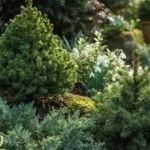
The conifer collection alone is worth the visit for any serious horticulturist. Ferrari-Carano maintains specimen plantings of Picea pungens ‘Hoopsii’ (blue Colorado spruce), Cedrus atlantica ‘Glauca Pendula’ (weeping blue atlas cedar), and Abies concolor (white fir) — plants that perform exceptionally in Dry Creek Valley’s well-drained, calcium-rich soils.
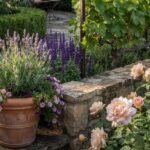
The rose garden, accessed via a wooden footbridge over the estate pond, centers on hybrid tea roses but incorporates old garden rose species (Rosa gallica, R. damascena, R. centifolia) that bring historical depth and superior fragrance to the collection. The footbridge transition is deliberate design strategy: crossing water creates a psychological threshold that heightens sensory attention to what follows. It’s a technique borrowed from Japanese garden design — the spatial compression before release into the garden room.
The flowering shrub collection includes a significant Rhododendron and Azalea grouping that benefits from the slight acidity and excellent drainage of the gravelly Dry Creek alluvium. Notable specimens include Rhododendron yakushimanum hybrids and deciduous azaleas (Rhododendron Knap Hill group) with exceptional fall color.
Just as flowers make good neighbors in mixed borders at home, the Ferrari-Carano design demonstrates at scale how integrating diverse flowering species — annuals threading through shrub borders, bulbs naturalizing under deciduous trees — creates a multi-season display that no single-genus planting can achieve.
Maintenance Reality
Maintaining 2,000+ species across 5 acres with the groomed precision Ferrari-Carano presents requires a substantial professional horticultural team. The garden’s condition reflects year-round employment of trained gardeners using systematic pruning calendars, soil testing protocols, and variety-specific fertilization programs. This level of maintenance is rarely discussed in travel-oriented garden coverage, but it’s essential context for anyone hoping to adapt these techniques realistically.

Garden #4: The Hess Collection Winery, Napa — The Artistic Garden
The Horticultural Premise
Mount Veeder’s elevation (approximately 2,000 feet above Napa Valley floor) creates a fundamentally different growing environment than valley-floor wineries. The Hess Collection garden works with a Mediterranean-influenced montane microclimate: cooler nights, frequent morning fog, well-drained volcanic-origin soils with higher organic matter than valley clay. The result is a garden where perennial grasses and structural water features perform with unusual sophistication.
The Plant Palette: Structure Over Spectacle
The Hess garden emphasizes textural complexity over floral spectacle — a sophisticated design choice that aligns with the winery’s art gallery orientation. Key design elements include:
- Ornamental grasses: Stipa tenuissima (Mexican feather grass), Pennisetum setaceum ‘Rubrum’ (purple fountain grass), and Miscanthus sinensis varieties provide movement, seasonal color shift, and low-water beauty that static shrub plantings cannot match.
- Mixed perennial borders: Plantings of Salvia nemorosa, Agapanthus africanus, Penstemon heterophyllus, and Hemerocallis cultivars create a succession of bloom from April through September with minimal supplemental irrigation once established.
- Water lily pond: The reflecting pool with Nymphaea cultivars serves dual horticultural purposes — providing a microhabitat that supports beneficial amphibians (tree frogs that consume pest insects) and creating a reflective surface that increases ambient light in the garden by approximately 15–20%.
- Wisteria pergola: Wisteria sinensis or W. floribunda (likely — exact cultivar information isn’t publicly documented) requires annual hard pruning after flowering and again in late summer to prevent the structural damage these vigorous climbers can inflict on wooden pergola members. When correctly managed, wisteria can persist for 50–100 years on sound structures.
Elevation-Specific Considerations
Gardening at Mount Veeder’s elevation means frost risk extends later into spring (sometimes into mid-April) and returns earlier in fall (late October). Tender perennials that perform without protection in Napa Valley need cold protection here. This creates a distinct plant palette that inadvertently educates visitors about the diversity of microclimates within a region often treated as monolithic.
Garden #5: Matanzas Creek Winery, Santa Rosa — The Working Lavender Landscape
The Horticultural Premise
Matanzas Creek represents a different category from the other four: it’s a garden where the primary planted crop is also the aesthetic feature AND the raw material for value-added products sold in the tasting room. The lavender fields are simultaneously agriculture, garden design, and retail supply chain. This integration of ornamental and productive function is one of the most sophisticated ideas in contemporary horticulture.
The Lavender Collection: Species and Cultivar Selection
Not all lavender performs equally in Bennett Valley’s cool, fog-influenced microclimate. Matanzas Creek’s lavender collection was developed through deliberate cultivar trialing. The primary species represented include:
- Lavandula angustifolia (English lavender): Highest essential oil quality, most cold-tolerant, preferred for sachet and culinary products. Cultivars like ‘Hidcote’, ‘Munstead’, and ‘Vera’ dominate production rows.
- Lavandula x intermedia (lavandin, hybrid of L. angustifolia x L. latifolia): Higher oil yield, longer flower stems, but slightly inferior fragrance complexity compared to true English lavender. ‘Grosso’ and ‘Provence’ are the most widely planted commercial cultivars.
- Lavandula stoechas (Spanish lavender, butterfly lavender): Earlier blooming, dramatic butterfly-top flowers, but less hardy and shorter-lived than L. angustifolia. Used decoratively rather than for harvest.
Lavender Cultural Requirements (Critical for Replication)
Lavender is frequently killed by excessive moisture rather than cold. The key management factors Matanzas Creek’s production success depends on:
- Drainage: Bennett Valley’s loamy soils must be amended with coarse grit or the planting beds mounded to ensure crown drying after rain. Phytophthora root rot is the primary killer of established lavender.
- Annual pruning: Cut back to 2–3 inches above the previous year’s woody growth immediately after harvest (typically late July in this region). Never cut into old wood below green growth nodes — lavender cannot regenerate from bare wood.
- pH management: Optimal 6.5–7.5. Highly acidic soils (common in high-rainfall areas) require lime amendments to maintain lavender health.
The five additional gardens on the Matanzas Creek property — including native plant areas and an ornamental cutting garden — extend the horticultural interest well beyond the lavender rows and make this a full half-day visit for serious gardeners.

Data Matrix: Winery Garden Comparison Guide for Serious Visitors
| Feature | Kendall-Jackson (Fulton) | Benziger (Glen Ellen) | Ferrari-Carano (Healdsburg) | Hess Collection (Napa) | Matanzas Creek (Santa Rosa) |
|---|---|---|---|---|---|
| Garden Size | 2 acres | ~25 acres total farm | 5 acres | ~1.5 acres formal | ~2 acres lavender + 5 ancillary |
| Design Philosophy | Sensory/educational | Biodynamic ecosystem | Formal collector | Artistic/structural | Productive/ornamental integration |
| Horticultural Focus | Herbs, vegetables, aromatics | Vine ecology, cover crops, insectaries | 2,000+ species mixed ornamentals | Perennials, grasses, water features | Lavender production + ornamentals |
| Soil Type | Sandy loam, Goldridge series | Volcanic clay loam, benchland | Gravelly alluvium, Dry Creek | Volcanic origin, Mt. Veeder | Loamy clay, Bennett Valley |
| USDA Hardiness Zone | Zone 9b | Zone 9b | Zone 9b | Zone 9a–9b | Zone 9b |
| Irrigation Method | Drip + hand watering | Biodynamic sprays + minimal irrigation |