


The Ultimate Lawn Maintenance Cheat Sheet: Your Guide to a Perfect Lawn
Are you tired of looking out at a lawn that’s more brown than green? Do weeds seem to thrive while your grass struggles? Many homeowners feel overwhelmed by lawn care, unsure of where to start or what to do. This lawn maintenance cheat sheet provides the simple steps to achieve a lush, green lawn you can be proud of.
This guide simplifies the process, giving you a step-by-step approach to basic grass care. We’ll cover essential practices like mowing and watering, as well as important techniques like dethatching and aeration. By following this lawn maintenance cheat sheet, you’ll gain the knowledge and confidence to transform your lawn.
Estimated reading time: 10 minutes
Key Takeaways
- Master the basics: mowing, watering, and fertilizing.
- Learn when and how to dethatch your lawn.
- Understand the benefits of aeration.
- Implement effective weed and pest control strategies.
- Create a lawn maintenance schedule for year-round care.
Table of Contents
- Basic Lawn Maintenance Practices
- Dethatching Your Lawn
- Aerating Your Lawn
- Advanced Grass Care Tips
- Creating a Lawn Maintenance Schedule
Section 1: Basic Lawn Maintenance Practices – The Foundation of Grass Care
Building a healthy lawn starts with the basics. Consistent and proper mowing, watering, and fertilizing are the cornerstones of effective lawn maintenance.
Mowing
Proper mowing is crucial for grass care. Taller grass actually promotes deeper roots, which makes your lawn more resilient and better able to absorb nutrients. These taller blades also naturally shade the soil, hindering weed growth.
- Ideal Height: The ideal mowing height varies depending on your grass type. Cool-season grasses (like Kentucky bluegrass and fescue) generally thrive at a height of 2.5-3.5 inches, while warm-season grasses (like Bermuda and zoysia) prefer a shorter cut of 1-2 inches.
- The One-Third Rule: Never remove more than one-third of the grass blade at a time. Cutting off too much stresses the grass, making it more susceptible to disease and pests.
- Frequency: Mowing frequency depends on the grass type and growth rate. During peak growing season, you may need to mow once or twice a week. Adjust as needed to avoid violating the one-third rule.
Watering
Consistent and correct watering techniques are vital for a thriving lawn. If you’re also interested in other types of plants, learning how to take care of Pothos may be helpful.
- Deep, Infrequent Watering: Water deeply but infrequently. This encourages deep root growth, making your lawn more drought-tolerant. Aim for about 1 inch of water per week, including rainfall.
- Morning Watering: Water early in the morning to minimize evaporation and reduce the risk of fungal diseases.
- Avoid Overwatering: Overwatering leads to shallow roots and increases the risk of disease.
- Testing for Water Needs: A simple test: Step on your grass. If it springs back up quickly, it doesn’t need water. If it stays flattened, it’s time to water.
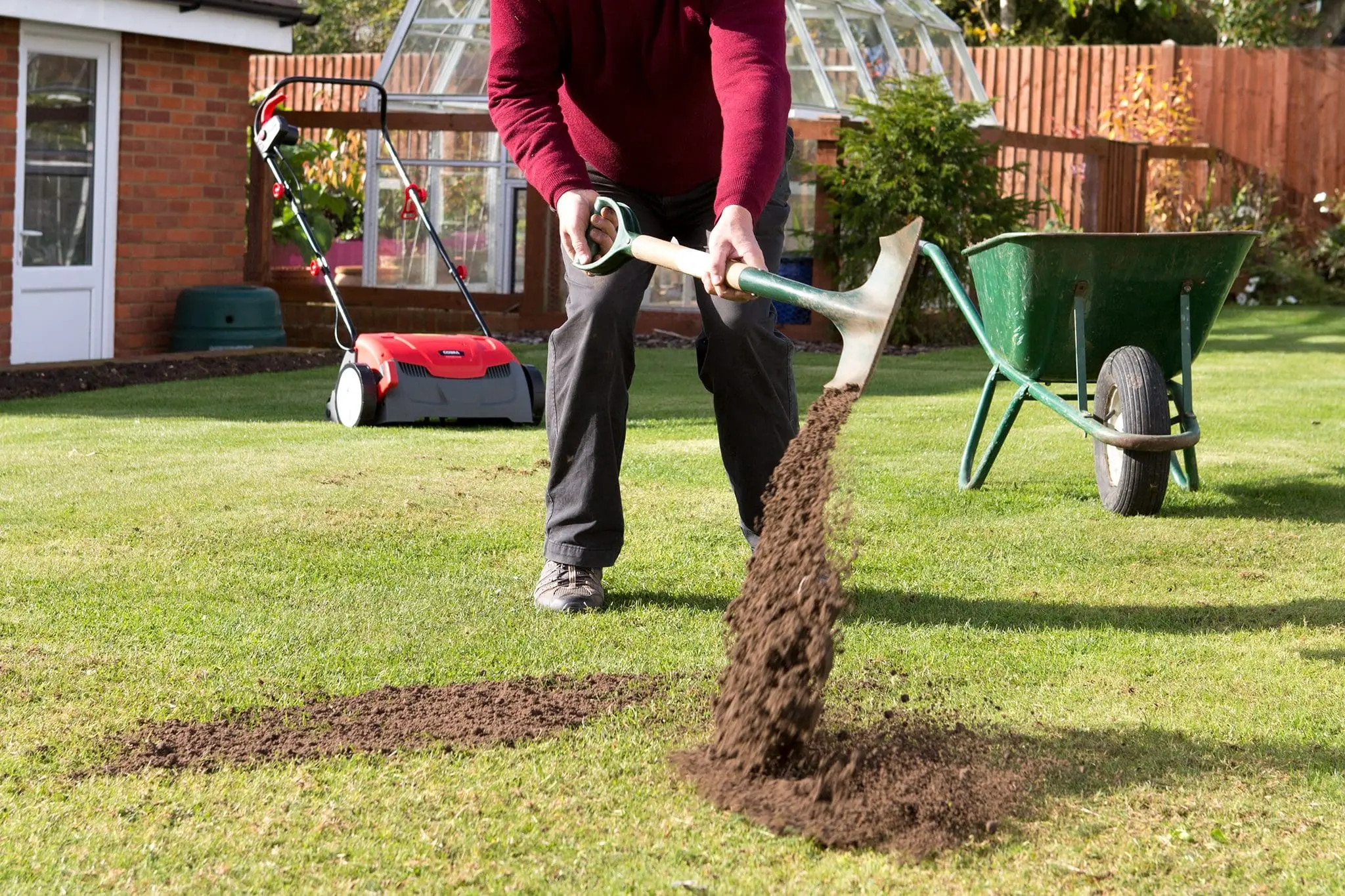
Fertilizing
Fertilizer provides essential nutrients for healthy grass care, but understanding different types is key.
- Types of Fertilizer: Fertilizers come in granular and liquid forms, with slow-release and quick-release options. Organic fertilizers offer a natural approach, while synthetic fertilizers provide a concentrated dose of nutrients.
- N-P-K Ratio: The N-P-K ratio (nitrogen, phosphorus, potassium) indicates the percentage of each nutrient in the fertilizer. Nitrogen promotes leaf growth, phosphorus supports root development, and potassium enhances overall plant health.
- Timing: Fertilize according to your grass type and the season. Cool-season grasses typically benefit from fertilization in the spring and fall, while warm-season grasses are best fertilized in the late spring and summer. Check out this lawn care calendar for more guidance.
- Follow Instructions: Always follow fertilizer instructions carefully to avoid burning your lawn.
Section 2: Dethatching Your Lawn – Removing the Hidden Threat
Thatch is a layer of dead organic matter that accumulates between the grass blades and the soil surface. While a thin layer of thatch can be beneficial, too much can prevent water, air, and nutrients from reaching the soil. Many people also cultivate Hibiscus in their yard for its colorful, tropical flowers.
- Why Thatch is Harmful: Excessive thatch creates a breeding ground for pests and diseases and restricts root growth.
- Identifying Thatch Buildup: Check for excessive thatch by digging up a small section of lawn. A thatch layer thicker than ½ inch generally requires dethatching.
- Dethatching Methods:
- Raking: Suitable for light thatch buildup. Use a thatching rake to manually remove thatch.
- Power Rake/Vertical Mower: For heavier thatch buildup. These machines use vertical blades to remove thatch.
- When to Dethatch: The best time to dethatch is during the active growing season (spring or early fall for cool-season grasses, late spring or early summer for warm-season grasses).
Section 3: Aerating Your Lawn – Breathing New Life into Your Soil
Aeration involves creating small holes in the soil to improve air circulation, water drainage, and nutrient absorption.
- Why Aeration is Important: Compacted soil restricts root growth and makes it difficult for grass to thrive.
- Aeration Methods:
- Core Aeration: Uses a machine to remove small plugs of soil from the lawn. This is the most effective method.
- Spike Aeration: Uses a tool to poke holes in the soil. This method is less effective than core aeration because it can compact the soil further.
- When to Aerate: The best time to aerate is during the active growing season. Consult a lawn care calendar for your specific region.
- Benefits of Aeration: Aeration allows water and nutrients to penetrate the soil more easily, promoting deeper root growth and a healthier lawn. For another approach to introducing air and nutrients, consider growing a countertop herb garden to enrich your soil.
Section 4: Advanced Grass Care Tips – Taking Your Lawn to the Next Level
Taking your lawn to the next level involves focusing on weed and pest control, as well as making informed decisions about grass types.
Weed Control
Effective weed control protects the health and appearance of your lawn. Managing weeds can feel similar to the maintenance needed when you care for bonsai plants.
- Natural Methods:
- Maintain a healthy lawn to naturally suppress weeds.
- Hand-pull weeds when they are small.
- Corn gluten meal can be used as a pre-emergent herbicide.
- Chemical Methods:
- Herbicides come in pre-emergent and post-emergent varieties, as well as selective and non-selective options.
- Always follow herbicide instructions carefully and use them responsibly.
Pest and Disease Management
Early identification and treatment are key to managing lawn pests and diseases. If you notice discoloration or damage, you can use a soil tester to get an idea of the quality of the soil.
- Identify pests and diseases early. Common lawn pests include grubs and chinch bugs, while diseases include brown patch and dollar spot.
- Use appropriate insecticides or fungicides to treat infestations or infections. Neem oil is a great option for natural pest control.
- Proper lawn maintenance practices help prevent pest and disease problems.
Choosing the Right Grass Type
Selecting the appropriate grass type is fundamental to a healthy lawn. This decision is similar to selecting the right variety when growing Japanese maples.
- Understand the differences between cool-season and warm-season grasses.
- Common grass types include Kentucky bluegrass, fescue, Bermuda grass, and zoysia grass.
- Choose the right grass type based on climate, soil conditions, and desired appearance.
Section 5: Creating a Lawn Maintenance Schedule – Your Monthly and Seasonal Guide
A consistent schedule ensures that all necessary tasks are completed at the right time.
- Spring: Fertilizing, weed control, dethatching (if needed), aeration (if needed), overseeding (if needed).
- Summer: Mowing, watering, pest and disease monitoring.
- Fall: Fertilizing, aeration, overseeding, leaf removal.
- Winter: Dormant feeding (if applicable), equipment maintenance. As winter approaches, you might want to learn how to take care of lavender.
Conclusion
This lawn maintenance cheat sheet offers a clear path to a healthier, more vibrant lawn. By implementing these techniques and sticking to a consistent grass care schedule, you’ll be well on your way to achieving the lawn you’ve always wanted. Starting from seed is also an option, a bit like growing roses from seeds.
FAQ
- How often should I mow my lawn?
- Mowing frequency depends on your grass type and growth rate. Aim to never remove more than one-third of the grass blade at a time.
- What is the best time of day to water my lawn?
- Water early in the morning to minimize evaporation and reduce the risk of fungal diseases.
- How do I know if my lawn needs to be aerated?
- If your soil is compacted and water doesn’t penetrate easily, it’s likely time to aerate.
- What is thatch, and why is it bad for my lawn?
- Thatch is a layer of dead organic matter that can prevent water, air, and nutrients from reaching the soil. Excessive thatch can create a breeding ground for pests and diseases.
- What type of fertilizer should I use on my lawn?
- Choose a fertilizer that is appropriate for your grass type and the season. Pay attention to the N-P-K ratio and follow the instructions carefully.
“`


