


My first potted papaya was an accident. I had thrown a few seeds from a store-bought fruit into a bucket of compost — genuinely not expecting anything — and three weeks later I had five seedlings fighting for space. I kept the strongest one, moved it into a proper pot, and eight months later I was eating papaya from my own balcony.
That experience taught me something most gardening guides don’t say upfront: papaya is one of the fastest and most forgiving fruit trees you can grow in a pot. If you give it full sun, well-draining soil, and consistent water, it practically grows itself. The mistakes that kill potted papayas are almost always the same three things — and I’ll tell you exactly what they are before we get into the steps.
Quick Answer: Choose a dwarf papaya variety, plant in a 15–20 gallon pot with fast-draining soil, place in full sun (minimum 6 hours daily), water deeply every 2–3 days, and feed with a high-potassium fertilizer monthly. In tropical climates like Singapore and Pakistan, a papaya planted from seed can produce fruit in 9–12 months. The biggest killers are waterlogged soil and insufficient sunlight.
Why Grow Papaya in a Pot?
Most people assume papaya needs a large garden. The dwarf and semi-dwarf varieties bred in the last two decades changed that completely. A container-grown papaya:
- Produces full-sized fruit on a plant that stays under 2 metres
- Can be moved indoors or under shelter during storms
- Grows in balconies, terraces, patios, and rooftops
- Fruits within 9–12 months from seed — faster than almost any other fruit tree
- Thrives in exactly the climate that Singapore, Malaysia, and Pakistan have year-round
According to the University of Florida IFAS Extension, Carica papaya is one of the most efficient fruit producers per square metre of growing space among tropical fruit trees — making it ideal for container growing.
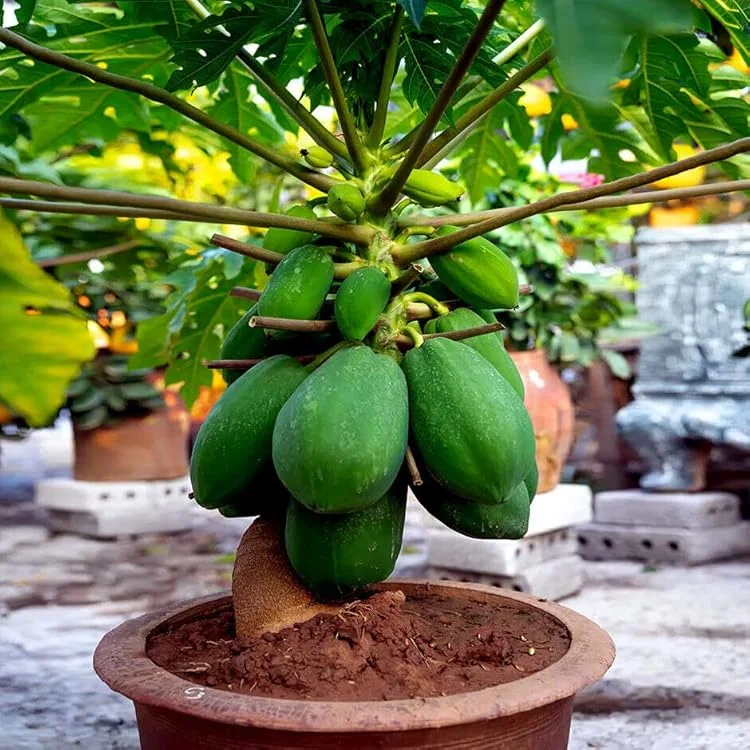
My Experience: The Balcony Papaya That Changed Everything
The papaya I grew by accident ended up being a Red Lady variety — I know because I saved the seed packet from the fruit I’d bought. It reached fruit-bearing stage in 9 months on a south-facing balcony in full sun. The pot was a 20-litre builder’s bucket with holes drilled in the bottom. Nothing fancy. The fruit it produced — heavy, orange-fleshed, properly sweet — was indistinguishable from a market papaya. My neighbour refused to believe I’d grown it in a pot until I showed her the plant.
What You Need Before You Start
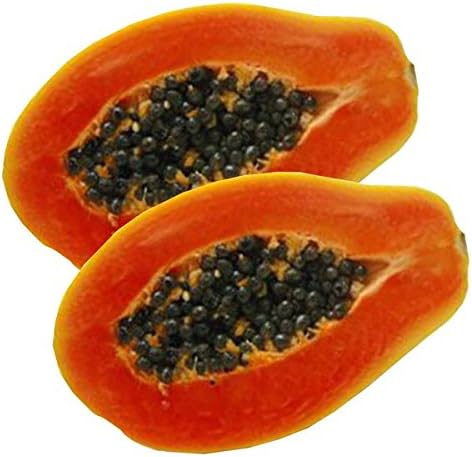
The Right Papaya Variety
This is the single most important decision. Full-sized papaya trees grow 3–9 metres tall — useless in a container. You need a dwarf or semi-dwarf variety specifically. The best options:
- Red Lady (Solo Red) — My personal recommendation. Stays under 1.8m, produces consistently sweet fruit, widely available as seeds → Red Lady Papaya Seeds
- Waimanalo — Compact Hawaiian variety, excellent for containers, slightly smaller fruit than Red Lady
- Tainung No.1 — Popular in Singapore and Malaysia, very productive, good disease resistance
- Maradol Dwarf — Best choice for Pakistan’s climate, heat-tolerant, large fruit
Avoid varieties labelled simply “papaya” without specifying dwarf or semi-dwarf — these are orchard trees and will outgrow any container within 18 months.
The Container
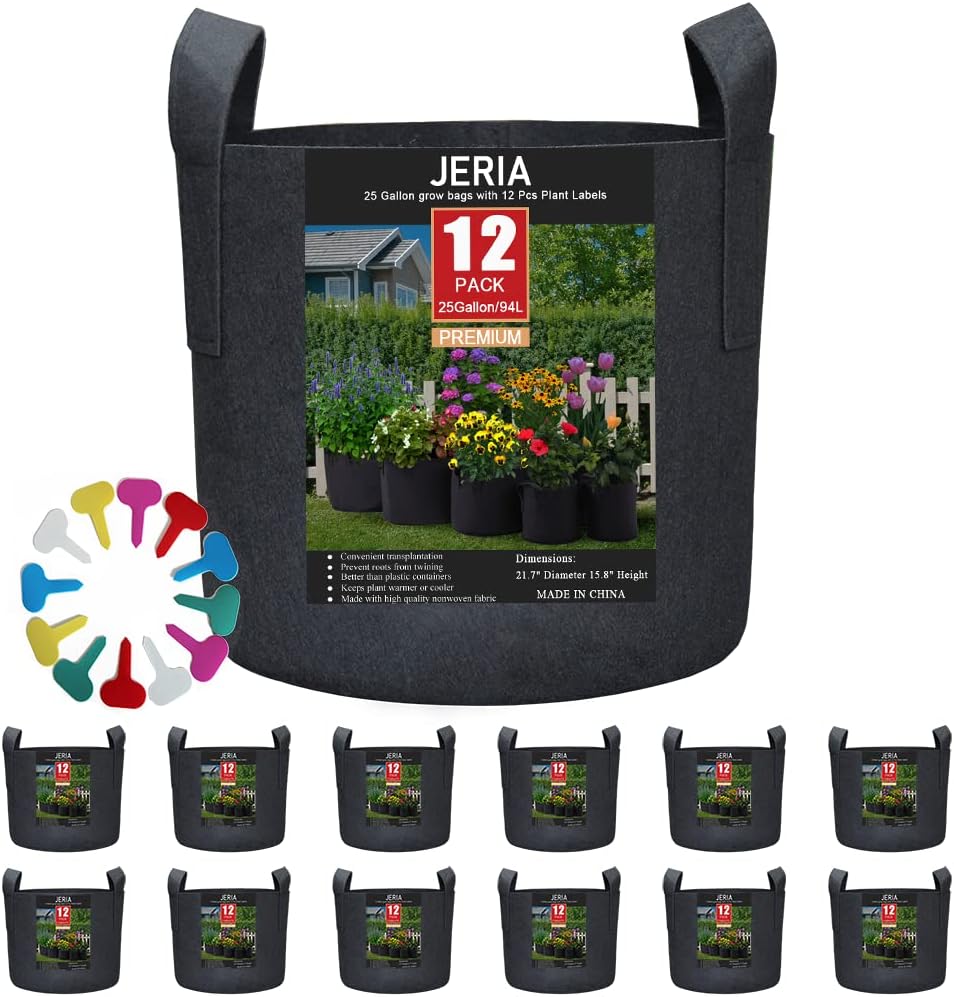
Size matters more with papaya than almost any other container fruit. Papaya develops a deep taproot and needs vertical space.
- Minimum size: 15 gallons (approximately 57 litres)
- Ideal size: 20–25 gallons for the best fruit production
- Material: Fabric grow bags are my preference — they air-prune the roots and prevent the waterlogging that kills most container papayas → 25 Gallon Fabric Grow Bag
- Drainage: Non-negotiable. If using a plastic or terracotta pot, drill at least 6 drainage holes in the base. One hole is not enough for papaya.
The Soil Mix
Standard potting compost retains too much moisture for papaya. You need a fast-draining mix:
- 40% good quality potting compost
- 30% perlite or coarse sand → Perlite for Potting Mix
- 20% coconut coir
- 10% compost or well-rotted manure
Mix these thoroughly before filling your container. The goal is a mix that drains completely within 30 seconds of watering — if water pools on top for more than a minute, add more perlite.
Fertilizer
Papaya is a heavy feeder and fruits best with high potassium levels. I use two products at different growth stages:
- Seedling to flowering: Balanced NPK fertilizer (10-10-10) → Balanced Slow-Release Fertilizer
- Flowering to fruiting: High-potassium fertilizer (0-10-30 or similar) — this is what drives fruit development and sweetness
Step-by-Step: Growing Papaya in Pots from Seed
Step 1: Starting Your Seeds
You can start papaya seeds directly in the final container or in seed-starting trays. I prefer starting in small pots first and transplanting at 4–6 weeks — it lets you select the strongest seedling and discard the weak ones.
From store-bought fruit: Scoop seeds from a ripe papaya, rinse off the gel coating under running water, and lay on a paper towel for 24 hours to dry. Plant immediately — papaya seeds lose viability quickly and should not be stored for more than 2–3 months.
From seed packets: Soak in lukewarm water for 24 hours before planting to speed germination.
Plant seeds 1cm deep, two or three per small pot. Keep moist (not wet) and at 25–30°C. Germination takes 2–3 weeks.
→ See also: How to Grow Watermelon from Seed in Pots for more container fruit-growing techniques that apply here.
Step 2: Selecting and Transplanting the Strongest Seedling
At 4–6 weeks, when seedlings have 4–6 true leaves, select the healthiest and most upright one. Discard or compost the others — overcrowding in a container destroys root development.
Transplant gently into your large container, disturbing the roots as little as possible. Papaya dislikes transplanting — handle the rootball carefully, and water immediately after transplanting.
Step 3: Position — Full Sun Is Non-Negotiable
This is where most container papayas fail indoors or on shaded balconies. Papaya needs a minimum of 6 hours of direct sun daily. Eight hours is better. Ten hours produces the fastest, sweetest fruit.
In Singapore and Pakistan, a south or west-facing placement works perfectly — you have the sun hours naturally. The only adjustment needed is protection from strong monsoon winds, which can snap the main stem.
Step 4: Watering — The Rule That Saves Everything
Water deeply, then wait until the top 2–3cm of soil is dry before watering again.
In tropical heat (30°C+), this typically means every 2–3 days. In cooler conditions, every 4–5 days. The test: push your finger 2–3cm into the soil. Dry? Water thoroughly until it drains from the bottom. Still moist? Wait.
Never let the pot sit in a saucer of standing water. Papaya roots in standing water will rot within 5–7 days — and by the time you see yellowing leaves, the damage is already severe.
→ See also: How to Grow and Take Care for Umbrella Plant — similar watering principles apply for tropical container plants.
Step 5: Fertilizing Schedule
Papaya grown in containers needs regular feeding because nutrients flush out with each watering. Here is the exact schedule I follow:
- Weeks 1–8 (seedling stage): No fertilizer — the seed provides enough energy
- Weeks 8–20 (vegetative growth): Balanced 10-10-10 fertilizer every 3 weeks, diluted to half-strength
- Flowering onwards: Switch to high-potassium fertilizer every 3 weeks — this directly improves fruit size and sweetness
- Frequency rule: Feed every third watering, never every watering — salt buildup in containers damages roots
Step 6: Understanding Papaya Flowering (This Part Confuses Everyone)
Papaya has three flower types, and which one your plant produces determines whether you get fruit:
- Female flowers: Large, round base directly behind the petals — these become fruit
- Male flowers: Long thin stalks with no rounded base — these produce pollen only, no fruit
- Hermaphrodite flowers: Most common in Red Lady and modern dwarf varieties — these self-pollinate and reliably produce fruit
If your plant produces only male flowers, it will not fruit on its own. The fix: grow at least two plants and keep one male as a pollinator, or hand-pollinate using a small brush to transfer pollen from the male flower to the female.
Most modern dwarf varieties sold as seeds are hermaphrodite by breeding — if you buy Red Lady or Tainung seeds, you’re unlikely to have this problem.
Growing Papaya in Pots in Singapore and Pakistan
Both countries have conditions that are nearly perfect for container papaya — the adjustments are minor but important.
Singapore-specific tips:
- Year-round growing season — no planting window to worry about
- Protect from HDB corridor wind funnels — they snap papaya stems. A simple stake helps
- Afternoon western sun is intense enough for excellent fruiting on a west-facing balcony
- Fungal issues are more common in Singapore’s humidity — avoid wetting the leaves when watering
Pakistan-specific tips:
- Best planting time: February–March (spring) or August–September (after peak summer heat)
- In Karachi and Hyderabad, year-round growing is possible — treat like Singapore
- In Lahore and northern regions, protect from frost in December–January — move the pot indoors or against a south-facing wall
- Water more frequently during May–June (45°C+ heat) — container soil dries out within 24 hours in peak summer
→ Related: How to Take Care of a Tulsi Plant — another tropical plant that thrives in Pakistan and Singapore conditions with similar care principles.
Troubleshooting: Problems I Have Seen (And Fixed)
Yellow Leaves on Lower Stem
Cause: Normal in most cases — papaya naturally sheds lower leaves as it grows taller. Only a problem if yellowing is happening on new growth at the top. Fix for top yellowing: Almost always a nitrogen deficiency in container-grown papaya. Apply half-strength balanced fertilizer and increase feeding frequency slightly.
Wilting Despite Wet Soil
Cause: Root rot from waterlogged soil — the single most common fatal problem in container papaya. Fix: Remove the plant from the pot, examine roots. Healthy roots are white and firm. Rotten roots are brown, mushy, and smell bad. Cut away all rotten roots, dust with cinnamon (natural antifungal), repot in fresh well-draining mix, and do not water for 3–4 days.
Flowers Dropping Without Setting Fruit
Cause: Usually low pollination (male-only plant, or no insects), or temperature stress above 38°C or below 15°C. Fix: Check flower type (see Step 6 above). Hand-pollinate using a small brush. If temperatures are extreme, move the pot to a more sheltered spot.
Fruit Staying Small and Not Ripening
Cause: Potassium deficiency, insufficient sun, or pot too small for root development. Fix: Switch to high-potassium fertilizer immediately. Ensure 6+ hours of direct sun. If roots are visibly circling the pot base, upsize the container.
White Powdery Coating on Leaves
Cause: Powdery mildew — more common in humid climates like Singapore. Fix: Spray with diluted neem oil solution (1 tsp neem oil + few drops dish soap per litre of water) every 7 days until cleared → Neem Oil for Plants
Common Mistakes I See (And Made Myself)
- Pot too small — the most common reason container papayas never fruit. Under 15 gallons, root restriction limits everything.
- Overwatering more than underwatering — papaya’s taproot rots easily in constantly wet soil. When in doubt, wait one more day.
- Not enough sun — 4 hours of sun produces a healthy-looking plant that never fruits. 6+ hours minimum for fruit production.
- Using standard potting compost alone — it holds too much moisture. Always mix in perlite.
- Feeding with nitrogen throughout — high nitrogen after flowering produces lush leaves but small fruit. Switch to potassium once flowers appear.
- Growing from supermarket seed without checking variety — large commercial papayas are orchard varieties. They will grow enormous. Use seeds labelled dwarf or semi-dwarf.
Water Culture vs Traditional Bark Mix: Honest Comparison
| Factor | Container Growing | Ground Growing |
|---|---|---|
| Space needed | 1m² balcony/terrace | 4–6m² garden bed |
| Time to first fruit | 9–12 months | 8–10 months |
| Control over soil | Full control | Limited |
| Moveable | Yes — storm protection possible | No |
| Water management | Easier — pot dries predictably | Harder in clay soils |
| Fruit size | Slightly smaller | Full sized |
| Best for | Flats, balconies, urban spaces | Gardens, compounds |
Continue Your Fruit Growing Journey
- How to Grow Watermelon from Seed in Pots
- How to Grow an Avocado Tree from a Seed
- Sweet Success: Simplest Way to Grow Strawberries
- How to Grow Apples from Seed
- How to Take Care of Kumquat Plant in Pots
Frequently Asked Questions
How long does it take for papaya to fruit in a pot? With a dwarf variety in full sun and tropical temperatures, expect fruit in 9–12 months from seed. In cooler climates it can take 14–16 months. The fastest results come from Red Lady and Tainung varieties in Singapore and Pakistan’s climate — 9 months is realistic.
Can papaya grow in a small pot? Not successfully. Papaya has a deep taproot and needs a minimum 15-gallon container to develop properly. In a small pot it will survive but will not fruit, or will produce tiny underdeveloped fruit. Invest in the right-sized container upfront.
How much sun does potted papaya need? Minimum 6 hours of direct sun daily for flowering and fruiting. 8–10 hours produces the fastest and sweetest fruit. Papaya in partial shade will grow but almost never fruits reliably.
Why is my papaya plant not flowering? The most common reasons: insufficient sun (under 6 hours), pot too small restricting root development, or over-feeding with nitrogen which promotes leaf growth at the expense of flowers. Switch to high-potassium fertilizer and ensure full sun placement.
Can I grow papaya indoors? Only under grow lights that deliver full-spectrum light for 12+ hours daily — and even then results are inconsistent. Papaya is a full-sun tropical tree. A south-facing balcony in Singapore or Pakistan will always outperform the best indoor setup.
Is papaya easy to grow in Pakistan? Yes — Pakistan’s climate in most regions is very well-suited. Karachi and Hyderabad can grow papaya year-round. Lahore, Islamabad, and northern cities need protection from winter frost and do best with a February–March planting to maximise the warm growing season. Use Maradol Dwarf or Red Lady varieties.
Do I need two papaya plants to get fruit? Not with modern dwarf varieties. Red Lady, Tainung, and most commercially sold dwarf seeds are hermaphrodite — they self-pollinate. If you grow from random seeds saved from a supermarket papaya, you may get male plants that don’t fruit on their own, which is why buying named dwarf varieties is strongly recommended.
Sources
- University of Florida IFAS Extension — Papaya Growing Guide
- Royal Horticultural Society — Growing Tropical Fruit
- Penn State Extension — Container Vegetable Gardening
— Hamza Kaleem, CultivateCore.com


